What is happening right now
- Parts of the A63 south of Bordeaux are still closed or restricted.
- Long-distance traffic is being rerouted via the A62, A65 and A64, through Langon and Pau.
- Around 42,000 hectares have burned in the Gironde region since the fires started.
- About 15,000 people near Biscarrosse have been allowed to return home.
- Spain’s national weather service, Aemet, is warning of a very high to extreme wildfire risk.
Delays around Bordeaux and Bayonne
The impact on the road network is significant. Sections of the A63 towards Bordeaux remain closed, and junction 1 on the A64, at Saint-Pierre-d’Irube, is closed to traffic coming from Toulouse. This has led to long queues and considerable delays around Bayonne.
Vehicles heading towards Spain are currently being diverted locally via the RD6635 and the Ametzondo viaduct before rejoining the A64 towards Toulouse. From there, traffic is directed to exit at the Mouguerre junction and rejoin the A64 towards Bayonne. Further north, long-distance traffic bypasses the closed stretch of the A63 via the A62, A65 and A64.
Authorities are advising drivers to postpone non-essential journeys where possible and to build in extra travel time.
How to reduce the effect for your business? Please contact team Trasegro.
Wildfires Spain: a second heatwave puts the country on alert
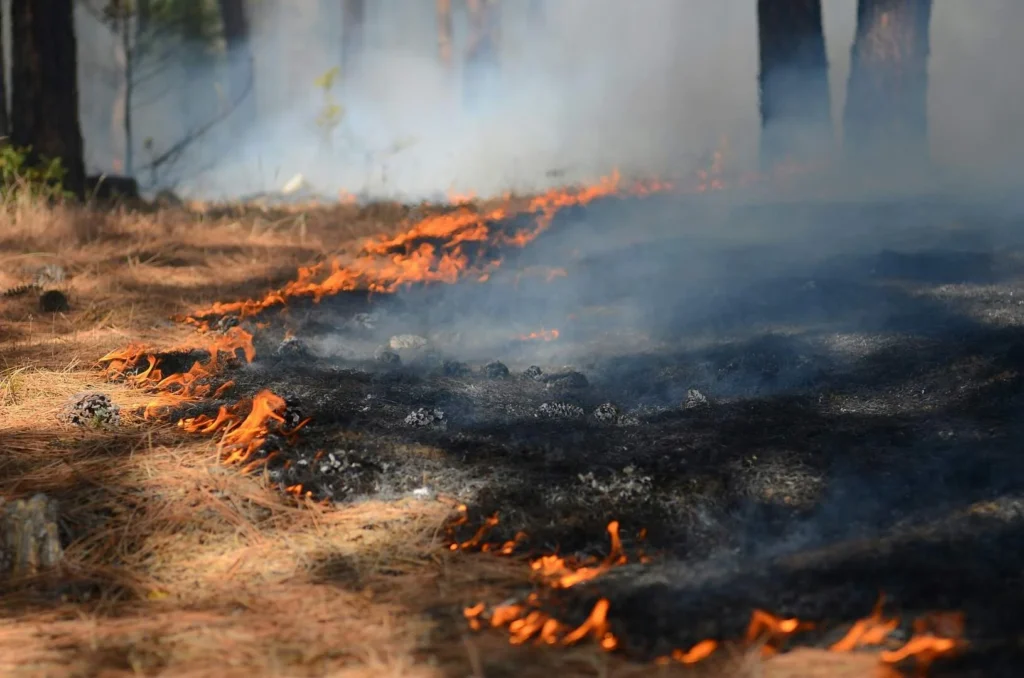
After nearly a week of intense fires, French authorities reported cautiously the first signs of improvement. The fire near Saumos, west of Bordeaux, has stopped expanding, although it is not yet fully extinguished. The Gironde prefecture describes the situation as stabilised, but still difficult and a second heatwave puts everybody on alert.
More than 220,000 residents and holidaymakers have been evacuated since the fires broke out, and French President Emmanuel Macron called them the country’s most violent wildfires since the end of the Second World War. Around 2,500 firefighters, military personnel and firefighting aircraft are working on the ground, with extra support arriving from Romania.
The situation around the wildfires in Spain is just as serious. The province of Ávila, west of Madrid, along with nearby parts of the Madrid and Castile-La Mancha regions, has been hit hard. More than 80,000 hectares of woodland and scrub have burned, and about 90,000 people have been evacuated as a precaution. In Castellón province, another large fire has led to the evacuation of around 16,000 people.
A new heatwave could make matters worse. Spain’s Interior Ministry has issued heat warnings for 13 autonomous communities, with orange alerts in Andalusia, Aragon, Castile-La Mancha, Extremadura, Galicia and the Basque Country, and yellow alerts across several other regions. Aemet expects temperatures of up to 40°C in parts of the country. According to the European Forest Fire Information System, Spain has already burned more than twice the area it typically loses in a full year.
Dozens of roads affected in Spain
Spain’s national traffic authority, DGT, has reported 52 road closures linked to the fires, mainly on regional and inter-regional roads in Ávila, Madrid, Toledo and Castellón. The good news for international transport is that no widespread closures have been reported on the main cross-border corridors so far. Still, local restrictions are changing quickly as the fires develop, so this could shift at short notice.
What this means for your transport planning
Neither French nor Spanish authorities have given an all-clear yet. Some evacuation orders have been lifted and a number of fires have slowed down, but temperatures of up to 40°C combined with dry conditions could easily spark new outbreaks. The A63 corridor between Bordeaux and the Spanish border remains one of the routes most affected, and that is a key artery for freight moving between the two countries.
Our advice for hauliers and cross-border operators is to build in extra time, stay flexible on routing, and check the latest updates from Bison Futé, the relevant French prefectures and Spain’s DGT before setting off, since restrictions can change without much warning.
How to reduce the effect for your business? Please contact team Trasegro.
Trasegro: logistics solutions for complex requirements
With a strong focus on personal service and professionalism, Trasegro supports clients in navigating complex logistics challenges with flexible, reliable solutions.