From vessel shortage to growing capacity
For most of 2026, container shipping was a seller’s market. Disruptions in the Middle East, long detours around the Cape of Good Hope and port congestion in North Asia and Europe absorbed huge amounts of vessel capacity. Carriers had fewer ships available than the market needed, and that showed in the price. Spot rates from Shanghai to the US West Coast rose to over 7,000 dollars per forty-foot container in July, compared to roughly 1,800 dollars in February.
That situation is now slowly shifting. Demand for vessel capacity, measured in container miles sailed, is growing more slowly than the fleet itself. In other words: there are more ships than the market can comfortably fill.
Why the balance is tipping now
Three developments come together this autumn.
The first is the gradual return to the Suez Canal. Since 2024, most Asia-Europe services have sailed around Africa, adding thousands of nautical miles to every voyage. That detour tied up a large share of the global fleet. Now more and more carriers are routing services back through the Red Sea. Maersk and CMA CGM already moved several services back over the summer, and the Premier Alliance (ONE, HMM and Yang Ming) will follow with its Southeast Asia to North Europe service from mid-October 2026. Every service that switches back releases ships into the market.
The second is the seasonal dip around China’s Golden Week, which ran from 1 to 7 October. Carriers cancelled sailings on both the Transpacific and Asia-Europe trades to match lower cargo volumes during the holiday period. That temporarily reduces vessel demand even further.
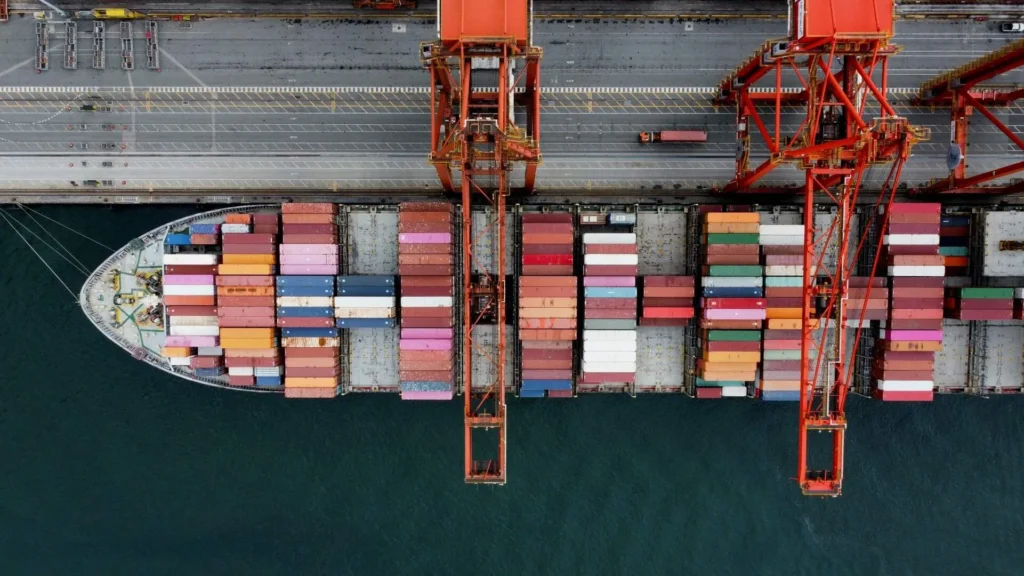
The third, and most structural, is the steady flow of new ships. Almost 200,000 TEU of new capacity was delivered in September alone, while no older ships were scrapped. The global orderbook now stands at around 45 percent of the existing fleet, the highest level since 2009.
What this means for freight rates
The first effects are already visible. Container freight rates eased at the end of September for the first time since July, and carriers started offering discounts on October shipments. Market activity is expected to remain quiet for the next few weeks as volumes recover from the holiday period.
That does not mean rates will collapse overnight. Freight futures still point to a possible rebound in November and December, when carriers usually try to push through year-end rate increases. Carriers also have tools to protect their rates, such as cancelling more sailings or slowing ships down. But the underlying direction is clear: with more capacity coming in and fewer ships tied up on long detours, pressure on rates is likely to increase into 2027.
A transition period with new risks
A softer market brings opportunities, but also uncertainty. The return to the Suez route happens service by service, not all at once. During this transition, schedules change, port rotations are adjusted and some ports may suddenly receive more ships in a short period. That can create temporary congestion at European terminals, especially when delayed vessels from different routings arrive at the same time.
Blank sailings also remain part of the picture. When carriers cancel departures to support rates, cargo can be rolled to the next available vessel. For time-sensitive or high-value shipments, that can have real consequences further down the supply chain.
Want to know how these changes affect your shipments? Please contact team Trasegro.
What businesses can do now
This is a good moment to take a critical look at your logistics setup. Review your current rate agreements and check whether they still reflect market conditions. Shorter-term arrangements may offer more flexibility in a falling market, while long-term contracts give stability if a year-end rebound materialises.
It also pays to keep both routing scenarios in mind. As long as carriers are still switching between the Cape and Suez routes, transit times can differ from one sailing to the next. Building some buffer into your planning, especially for the peak period before the end of the year, helps avoid surprises.
Finally, stay close to your logistics partner. In a market that is turning, timing and information make the difference.
Trasegro: Anything except standard. Logistics solutions for complex requirements.
With a strong focus on personal service and professionalism, Trasegro supports clients in navigating complex logistics challenges with flexible, reliable solutions.
What sets Trasegro apart is not just what we do but how we do it. We listen, communicate and act in partnership, responding quickly when it matters most. No one-size-fits-all approach but tailored solutions that fit your reality.