Why this round of changes hits differently
The UK’s Customs (Tariff and Miscellaneous Amendments) (No. 2) Regulations 2026 came into effect on 9 March 2026. It is a substantial reshuffle of commodity code structures, and six chapters carry most of the weight:
- Chapter 28: inorganic bases and lithium compounds
- Chapter 29: organic chemicals
- Chapter 38: artificial graphite and photovoltaic materials
- Chapter 73: iron and steel
- Chapter 84: machinery
- Chapter 85: electrical equipment
For chemical and pharma businesses, classification is everything. One wrong code and your duty rate changes, your preferential treatment disappears, and your shipment ends up in line for an inspection it did not need.
The revised structure also reflects where the UK is heading politically. Sustainability and emerging technologies now have their own categories: lithium iron phosphate, hydrogen fuel cells, lithium nickel manganese cobalt oxides, photovoltaic wafers. New labels, new rules, new opportunities to get it wrong.
There is good news in the small print. More than 10,000 pharmaceutical products still qualify for zero-duty treatment under WTO agreements — but only if they are classified correctly.
The financial pressure is already building
These regulatory shifts are not arriving one by one. They are stacking.
France ends Regime 42. From 1 January 2026, France closed the door on Customs Procedure 4200. For years, this was a clean way to defer import VAT when routing goods through France. That advantage is gone. VAT now has to be paid at the point of entry, full stop. For companies moving high-value pharma or chemical shipments, that can mean millions in extra working capital just to keep the same flow running.
Low-value EU shipments get more expensive. From 1 July 2026, the €150 customs exemption for low-value parcels disappears. In its place: a flat €3 duty per item type. E-commerce is the obvious target, but pharma companies shipping samples, specialty products, or small-batch medical goods will feel it too, mostly through the extra admin.
HMRC is tightening enforcement. Wrong commodity codes can now lead to back duty claims, financial penalties, shipment delays, additional inspections, and the loss of duty relief eligibility. For a temperature-sensitive shipment on a tight schedule, even a short hold-up at customs can ripple straight through to manufacturing — or worse, to patients waiting at the other end.
How to reduce the effect for your business? Please contact team Trasegro.
What to do before the deadlines arrive
The teams that will sail through this transition are the ones who started preparing months before they had to.
Audit your commodity codes. Pull every active classification out of your ERP, your customs documentation, and your supplier records. Pay particular attention to chapters 28, 29, and 38. Cross-reference everything with updated HMRC correlation tables and the EU Combined Nomenclature changes. It is not glamorous work, but it is work.
Recalculate landed costs. A lot of businesses are still operating on duty assumptions that no longer hold. Now is the moment to redo the maths, especially for high-volume imports and temperature-controlled freight. Check whether transitional relief or preferential trade agreements still apply to any of your shipments.
Update your systems. This one gets underestimated. Older ERP platforms, customs software, and warehouse management tools may reject the new code structures outright. The result: blocked declarations, delayed releases, and expensive storage charges at the port. Test your data exchange with customs authorities early, while there is still time to fix things calmly.
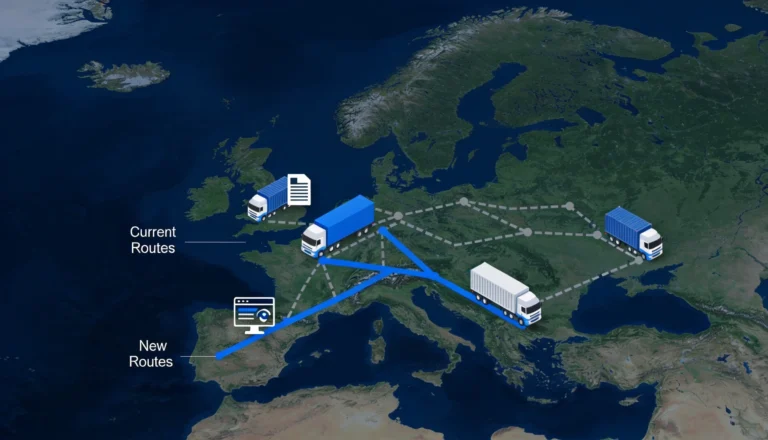
Reassess your EU routing. If your current setup leans on France for VAT timing, that assumption needs a fresh look. Alternative entry points may give you better cash flow flexibility and reduce the sting of immediate VAT payments.
Compliance is getting more complex across the board
Tariffs are only one part of the puzzle. Chemical and pharma shipments often fall under ADR and GDP requirements too. That means customs classifications need to line up with transport regulations, hazard documentation, and storage conditions. When those systems drift apart, you end up exposed on two fronts at once: customs penalties and transport compliance violations.
Anyone using relief schemes — Inward Processing, Outward Processing, Returned Goods Relief, Temporary Admission, or Customs Warehousing — should expect closer scrutiny from HMRC under the new rules. Documentation accuracy was always important. Now it is non-negotiable.
The case for a good logistics partner
Here is the honest part. As customs procedures get more technical, more businesses are quietly realising they cannot absorb every change in-house without raising their operational risk. That is especially true for chemical and pharma supply chains, where delays are not just expensive but sometimes business-critical.
This is where the right partner earns their place. Not as an extra step in the chain, but as the team that keeps the chain intact.
The companies that prepare early will come out ahead
There is pressure in all of this, but also opportunity. The businesses that classify correctly and modernise their systems early will see lower duty exposure, faster customs processing, better supply chain visibility, fewer compliance headaches, and stronger trust from their customers.
In a trade environment that keeps getting more complicated, reliability itself becomes a competitive advantage.
UK-EU trade is becoming more technical, more regulated, and more expensive to manage. That is the reality. The companies that adapt now will be in a far better position than the ones still waiting when the final deadlines arrive.
Looking past 2026
These tariff changes are not a one-off. They are part of a broader shift in how UK-EU trade is going to work for years to come. Administrative costs are climbing. Data requirements are expanding. Sustainability-focused classifications are becoming the norm. Customs processes are getting more digital and more closely monitored.
For supply chain teams, that means long-term planning can no longer be just about transport cost and transit time. Customs strategy, VAT structure, compliance systems, and logistics flexibility have moved into the same conversation. They belong there.
The time to act is now
For chemical and pharma importers, the cost of waiting is real. One wrong commodity code can trigger delays, inflate costs, or knock a critical supply chain off rhythm. The operational fallout often outweighs the financial penalty.
The teams that start reviewing classifications, systems, and logistics structures today will have the time to test their solutions properly and train their people before enforcement tightens up. The ones that wait will be reacting under pressure, with rising costs and avoidable disruption getting harder to control every week.
Trasegro: logistics solutions for complex requirements
With a strong focus on personal service and professionalism, Trasegro supports clients in navigating complex logistics challenges with flexible, reliable solutions.