Why the Rhine’s water level carries so much weight
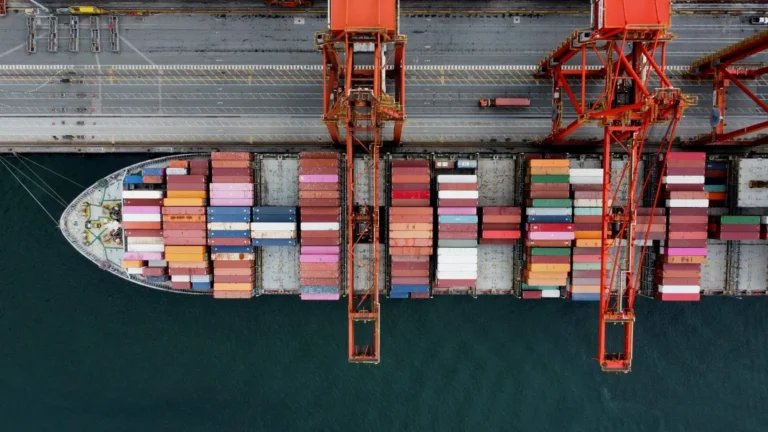
The Rhine is not just a river. It is the main artery connecting the ports of Rotterdam, Amsterdam and Antwerp to the industrial core of Germany, and when that artery narrows, everything downstream feels it. At the key gauge point near Kaub, water levels have fallen to historic lows this summer, at times measuring only a matter of centimetres. Barge operators are having to load far below normal capacity, and in some stretches of the river, continuous shipping traffic risks grinding to a halt altogether. Chemicals, raw materials and bulk goods that would usually travel by water now need somewhere else to go, and for most of that cargo, “somewhere else” means the road.
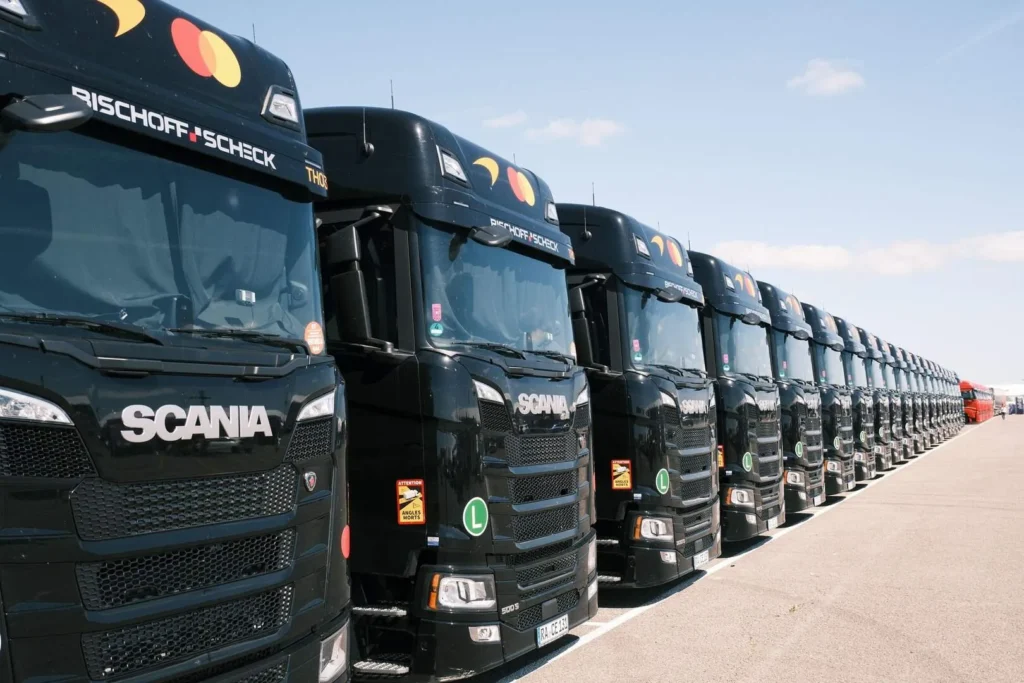
German authorities have seen this coming and acted early. To keep production lines running and supply chains from seizing up, eight federal states have now introduced some form of temporary exemption from the standard Sunday and public holiday driving ban, specifically for freight that replaces disrupted barge transport. Niedersachsen, Nordrhein-Westfalen, Rheinland-Pfalz and Saarland have gone furthest, adding extra exemptions for trucks over 7.5 tonnes, since these four states border the Rhine corridor most directly and carry the bulk of the diverted freight.
A patchwork, not a single policy
Here is where things get genuinely complicated. Every state has set its own conditions, its own scope and its own expiry date, and none of them line up neatly. Most of the exemptions currently run until the end of August, while Rheinland-Pfalz and Saarland have pushed theirs out to the end of September. Other states have their own separate arrangements again, and at least one, Sachsen-Anhalt, has chosen not to introduce a blanket exemption at all, meaning individual permits are still required there.
For a planner routing a single shipment through three or four German states, that is not a minor footnote. An exemption that applies in one region does not automatically carry over the moment a truck crosses into the next. The type of cargo, the day of the week and the exact wording of each regional rule all matter, and getting any one of them wrong can mean a truck standing still on the exact day it was supposed to be moving.
How to reduce the effect for your business? Please contact team Trasegro.
More flexibility on paper, not necessarily more capacity on the road
It would be easy to read these exemptions as extra transport capacity appearing out of nowhere, but that is not quite how it works. Driving and rest time rules for drivers have not changed, and the summer holiday period was already tightening the availability of trucks and drivers across the German network before any of this began. More legal room to drive does not automatically mean more people available to do the driving. If anything, forwarders should brace for busier motorways and tighter capacity in the weeks ahead, relaxed bans or not.
Alongside the short term fixes, German federal and state authorities are also working on longer term solutions. Extra rail capacity, better coordination between roadworks projects and expanded transhipment points between barge, rail and road are all part of the plan. Maintenance on the Wanne-Eickel lock has reportedly been postponed to keep the Dortmund-Ems Canal open as an alternative route between the North Sea ports and the Ruhr area, a clear sign that this is being treated as a structural challenge rather than something that disappears with the next rainfall.
Staying ahead of a situation that keeps shifting
For companies that depend on reliable delivery windows, the practical advice has not really changed, only sharpened. Know exactly which German states your route passes through, check the current conditions and expiry date for each relevant exemption, and build in extra margin for the additional traffic these measures are likely to bring. Waiting until a shipment is already stuck at the roadside is the expensive way to find out the rules have shifted again.
How to reduce the effect for your business? Please contact team Trasegro.
Low water years are becoming less of an anomaly and more of a recurring feature of European logistics. The businesses that ride them out best tend to be the ones with a network that already knows where the alternatives are, well before they are needed. That is exactly where a dedicated logistics partner earns its keep, turning a shifting patchwork of regional rules into a transport plan that actually holds up on the road.
Trasegro: Anything except standard. Logistics solutions for complex requirements
With a strong focus on personal service and professionalism, Trasegro supports clients in navigating complex logistics challenges with flexible, reliable solutions.