The end of paper, the start of DIWASS
From 21 May 2026, every intra-EU waste shipment must run through DIWASS, the new Digital Waste Shipment System under EU Regulation 2024/1157. One platform, one process, no more juggling national portals, scanned forms, and email threads. Notifications, consents, tracking; all in one place.
On paper, that sounds great. Faster procedures, better visibility, the same rules in every Member State. In reality, registration only opens in April 2026. That leaves roughly one month for thousands of operators and authorities to get on board before the system is mandatory. A tight window for a project of this size.
For hazardous waste generators, the risk is concrete. If digital consents stall or a documentation error pops up in DIWASS, removal slows down. Storage limits and permit conditions do not wait for software. A short delay can quickly turn into a real production headache.
How to reduce the effect for your business? Please contact team Trasegro.
Where ADR meets environmental rules
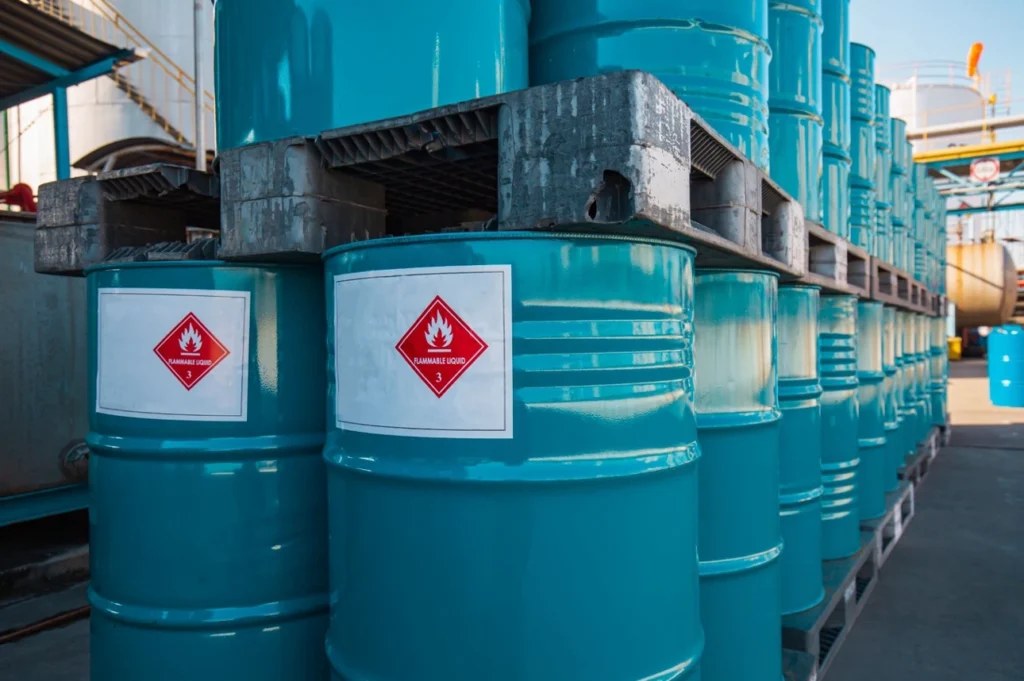
Cross-border hazardous waste lives at the crossroads of two regulatory worlds: ADR 2025 for dangerous goods on the road, and the Waste Shipment Regulation for environmental compliance. Both need to line up. Every shipment requires correct ADR transport documents with the right UN numbers and hazard classes, a notification or Annex VII entry in DIWASS, and in many cases proof of environmental audits for treatment facilities outside the EU.
From June 2026, a new Delegated Directive (EU 2025/1801) introduces a standard inspection checklist that authorities across all Member States must follow. Inspectors will not only check the vehicle and packaging. They will compare your documents side by side. Do the waste descriptions match between environmental and ADR classifications? Do the quantities line up? Are all certificates immediately available at the roadside?
Discrepancies are no longer a paperwork issue. They can become an enforcement issue on the spot. Category I violations, the heaviest tier, cover missing essential documents or leaking containers and trigger an immediate stop. For hazardous waste, where ADR codes and environmental codes do not always neatly overlap, keeping everything consistent requires close coordination between EHS, logistics, and quality teams. The days of figuring it out at the border are over.
The map of available routes is shrinking
The new rules also redraw the map of where waste can actually go. The export ban on hazardous waste for recovery to non-OECD countries stays in place and broadens. From November 2026, plastic waste exports to non-OECD countries are fully off the table. Other non-hazardous streams will follow, unless destination countries meet strict environmental criteria and appear on an authorized list.
For chemical and pharmaceutical companies, this hits closer to home than it might seem. Contaminated packaging, mixed production residues, electronic waste from labs and control rooms; all need a fresh look. Many streams that used to travel quietly to long-standing partners abroad now need a different destination.
On top of that, exporters must make sure that foreign treatment facilities undergo independent environmental audits. If an audit shows serious deficiencies, exports must stop. Compliance no longer ends at the truck leaving the gate; it follows the waste all the way to the treatment site. For smaller generators in particular, that is a lot to manage alone.
Lead times, capacity, and what changes for planning
In theory, DIWASS speeds up consents. In practice, the first months will probably feel the other way around. System hiccups, data quality issues, and stretched authorities can easily push processing times up rather than down.
The requirement to submit Annex VII information at least two working days in advance for green-listed waste is another change that hits just-in-time operations hard. Spent solvents and packaging residues accumulate fast and do not patiently wait for a 48-hour notice. Transitional arrangements through 2026 help, but the direction is clear: more advance notification, less improvisation.
At the same time, capacity outside the EU and OECD is closing off. Demand for treatment within these regions will go up, and so will waiting times at specialized facilities. For waste that needs high-temperature incineration or advanced recovery, that pressure is already noticeable. Combined with stricter storage limits at production sites, this turns waste removal into a real planning factor, not an afterthought.
Transport capacity needs a second look too. Carriers must be ADR compliant and able to handle digital documentation. Drivers need to retrieve and present DIWASS information instantly during a roadside check. Smaller carriers running on paper-only processes will struggle to keep up, which may quietly shrink the pool of available transport partners.
How to reduce the effect for your business? Please contact team Trasegro.
Where a specialized freight forwarder makes the difference
This is exactly the kind of environment where an experienced freight forwarder earns their place. Regulatory knowledge, digital tools, and a strong network of carriers and treatment partners are difficult to build up on your own, especially when you are not in logistics full-time.
A good forwarder does more than book a truck. They check waste characterization data before transport is arranged, prepare DIWASS submissions, verify carrier certifications, and keep an eye on the shipment from collection to treatment. They coordinate independent audits at foreign facilities, share the results, and maintain an up-to-date view of which partners stay compliant.
The new ADR Directive also makes it clear: every party in the chain carries responsibility. Forwarders share liability for documentation errors and routing mistakes. That is why investing in proper compliance systems, training, and digital tooling matters more than ever. Working with a partner that has done this for years is no longer a luxury; it is risk management.
Building a calm, resilient compliance approach
Surviving May 2026 well takes more than ticking boxes. It needs a clear governance line between EHS, supply chain, legal, and operations. Waste characterization, classification, transport, and treatment all need to speak the same language across systems and teams. ERP, lab data, and transport management tools should connect, not live on separate islands.
Training matters just as much. ADR driver training is mandatory, but everyone who touches waste, from production to dispatch, benefits from understanding why the documentation looks the way it does. Internal and external audits help spot gaps early. Lessons from incidents feed back into the process, instead of being filed away.
And honestly, scenario planning is essential right now. The DIWASS timeline is ambitious. Backup processes, buffer time in removal schedules, and pre-identified alternative treatment routes are not over-engineering; they are common sense for the first year of a new system.
From regulatory pressure to operational strength
It is tempting to see all this as another wave of compliance work. It is also an opportunity. Better traceability supports sustainability reporting and circular economy goals. Digital integration improves planning and route efficiency. Strong logistics partnerships add resilience for whatever regulatory wave comes next.
Companies that start preparing now will not just stay compliant in May 2026. They will end up with cleaner processes, fewer surprises, and a supply chain that handles complexity with confidence. That is exactly where Trasegro likes to operate.
Trasegro: logistics solutions for complex requirements
With a strong focus on personal service and professionalism, Trasegro supports clients in navigating complex logistics challenges with flexible, reliable solutions.