When the map changes mid-journey
Planning hazardous goods and temperature controlled road freight for 2026 feels a bit like recalculating your route halfway through a storm. New CO2 based tolls, a brand new Dutch truck charge, and diesel prices that swing with every headline out of the Middle East, all of it lands in the same twelve months.
We are not here to alarm you. We are here to help you see the road ahead clearly, so your cost per kilometre stays realistic, transparent and, above all, predictable.
Why 2026 rewrites the cost equation
Europe’s road charging rules now follow the user pays and polluter pays principles in full. From 2026, every Member State must vary heavy duty vehicle charges by CO2 emissions and factor in the cost of air pollution. Tolls, once a fixed line in your spreadsheet, are now a variable that shifts with the truck you send out.
Send two trucks down the same lane, in different CO2 classes, and you may pay two different tolls, even within a single country. Fuel and tolls, the two most volatile lines in your cost per kilometre, no longer move in the same direction. That is the part that keeps planners up at night.
The new Benelux tolling landscape
Belgium adds a CO2 layer. Belgium already runs a kilometre charge across its three regions. From 1 July 2026, Flanders introduces a CO2 based surcharge on top, split into five classes from 1 (least clean) to 5 (best performing). The cleaner and lighter your vehicle, the lower your rate per kilometre. Brussels applies an indexation, Wallonia adjusts its own rates, and every operator will need to register the vehicle’s CO2 class as a new parameter.
The Netherlands introduces distance based charging. On that same date, the Netherlands rolls out a brand new charge for trucks above 3,500 kg, based on distance driven on motorways and selected main roads. At 2026 price levels, the average sits around 19.1 euro cents per kilometre, though the exact figure depends on permitted mass, Euro class and CO2 class. In exchange, the Eurovignette disappears in the Netherlands and truck motor vehicle tax comes down.
Luxembourg and the corridors around it. Luxembourg stays inside the Eurovignette system for trucks of 12 tonnes and up, but since March 2025 its rates follow CO2 class and axle count. The spread is considerable: a one year vignette runs 764 euros for a CO2 Class 1 Euro 6 truck with one to three axles, against just 191 euros for a Class 5 vehicle. Germany’s CO2 linked toll tells a similar story, pushing tolls from roughly 12 percent of operator costs to around 20 percent, with older trucks facing increases of up to 83 percent.
How to reduce the effect for your business? Please contact team Trasegro.
What hazardous goods and cold chain lanes really cost
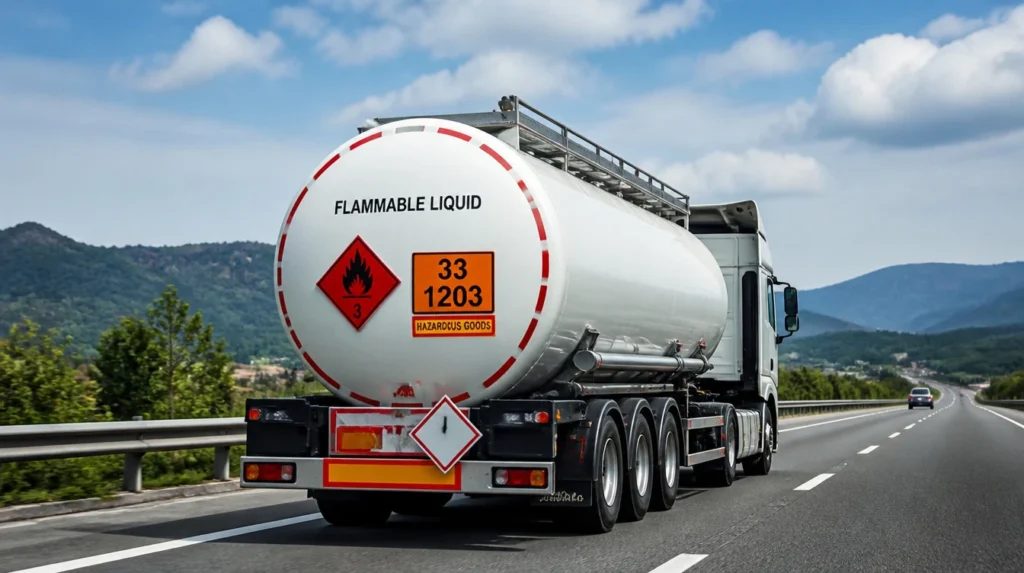
Hazardous goods (often referred to by their transport code, ADR) and GDP compliant transport for pharmaceuticals sit above standard freight from the start. Specialised equipment, certified drivers, stricter procedures and higher insurance all add weight to the base rate. A typical hazardous goods surcharge lands around 15 percent, with a minimum of 250 euros per shipment. Refrigerated transport adds its own layer, since the cooling unit burns fuel on top of the engine.
And then there is diesel, still the single biggest line on the invoice. A loaded articulated truck using 30 litres per 100 km costs roughly 0.45 euros per kilometre at 1.50 euros a litre, and 0.54 euros at 1.80 euros a litre. Prices eased through 2024 and early 2025, then climbed again as tensions flared in the Middle East. One forecast will not carry you through a year like this.
A practical way to recalculate your cost per kilometre
Guesswork in a spreadsheet will not cut it in 2026. This is the sequence we walk through with our clients.
- Start with a clean baseline. Gather trip level data per lane: loaded and empty kilometres, fuel burned, tolls paid, driver hours, waiting time.
- Map tolls segment by segment. Split each route by country and road category, then apply the correct 2026 tariff for that truck’s mass, Euro class and CO2 class.
- Model diesel in scenarios. Build a low, base and high price case, and calculate the fuel cost per kilometre for each.
- Translate surcharges into per kilometre terms. A 150 euro hazardous goods surcharge is 0.15 euros per kilometre on a 1,000 km lane, but doubles to 0.30 euros on a 500 km lane. Shorter lanes feel a minimum charge far more sharply.
- Do not forget empty running and dwell time. Empty legs still burn fuel and still trigger tolls, and an idle refrigerated trailer still needs to earn back its capital cost, just over fewer productive kilometres.
Smart moves for Benelux shippers
Toll pricing now blends infrastructure funding with climate policy, so budgeting a route takes more than distance. You need visibility into toll class, axle configuration, and the split between motorway and regional roads. Choosing a Benelux to Italy lane via Germany or via France is a genuinely different calculation than it was last year. Zero emission trucks come out ahead here too: Germany waives tolls for them until the end of 2025 and then charges only 25 percent, while Belgium and the Netherlands reward the cleanest CO2 classes with lower rates across the board.
In contracts, we recommend separating your base rate from fuel and toll surcharges, and linking those surcharges to transparent, published indices. That way neither side carries the full risk of a sudden diesel spike or toll hike alone. Intermodal transport, adding rail or short sea shipping for the long haul, can also ease your toll exposure, provided hazardous goods and pharmaceutical compliance are checked at every handover.
How to reduce the effect for your business? Please contact team Trasegro.
Turning complexity into control
2026 will hand you some real contradictions. Diesel may fall while tolls climb sharply, so lower fuel prices will not automatically translate into lower freight rates. Scenario planning, backed by one central overview that combines telematics, toll data and CO2 class per truck, is what keeps you in control rather than reacting after the fact.
At Trasegro, we build exactly this kind of model together with our clients: one point of contact, proactive alternative routes, and reliable capacity outside the spot market. Want to pressure test your hazardous goods or temperature controlled lanes for 2026? Get in touch, or submit a transport request, and we will help turn a complex cost picture into a clear and predictable plan.
Trasegro: Anything except standard. Logistics solutions for complex requirements
With a strong focus on personal service and professionalism, Trasegro supports clients in navigating complex logistics challenges with flexible, reliable solutions.