Why the numbers matter more than they look
Germany posted the strongest growth at 88.5 percent, followed by the Netherlands at 44.5 percent and France at 43.7 percent. Put those three markets together and you get a clear signal: electrification of freight is no longer scattered across a handful of pilot fleets. It is concentrated in exactly the corridors that connect the Benelux to the rest of Europe.
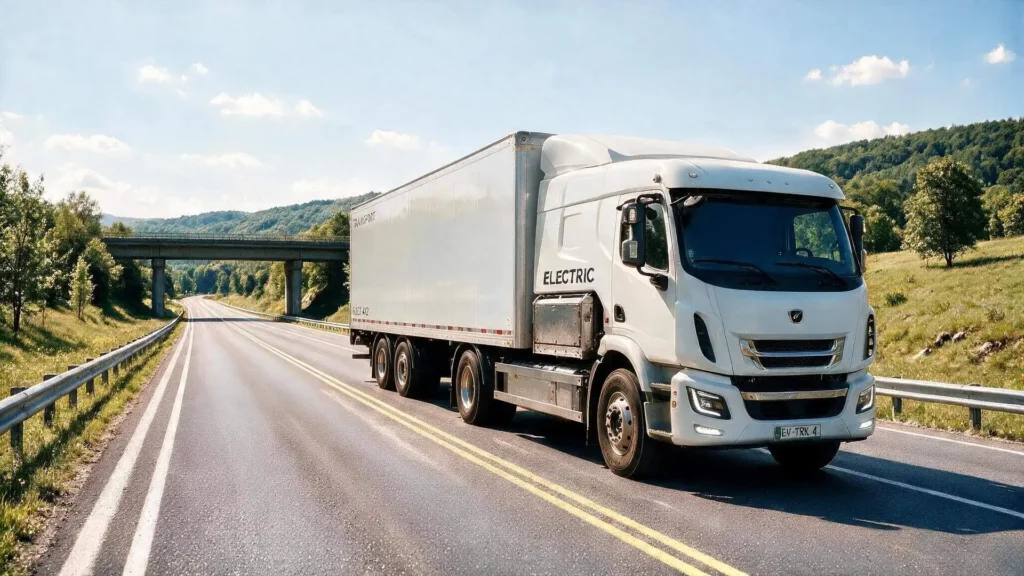
The total EU truck market grew 9.8 percent in the first half of 2026, reaching 171,933 vehicles year on year. Within that growth, the share of electric trucks rose from 3.6 percent in the first half of 2025 to 4.8 percent over the same period this year. That is a modest slice of the total market, but the direction and the speed of change are what matter for planning purposes, not the absolute share today.
Diesel still runs the show, for now
None of this means diesel is disappearing anytime soon. In the first half of 2026, 92.1 percent of all newly registered trucks in the EU still ran on diesel. Electrification is accelerating, but it is accelerating from a small base, and mixed fleets will remain the reality on European roads for years to come.
That mix is exactly what makes planning harder, not easier. A logistics network built for one fuel type is straightforward. A network with diesel, electric and the occasional hydrogen or LNG vehicle sharing the same routes, depots and time windows needs a different kind of route planning altogether.
Vans are following the same curve
Electric trucks are not the only vehicles gaining ground. Newly registered electric vans in the EU grew 41.6 percent in the first half of 2026, pushing their market share from 9.5 to 13.2 percent. Diesel vans still hold the largest share at 79.1 percent, but petrol models are steadily losing ground to electric and hybrid alternatives. For last-mile and regional distribution, the shift is happening even faster than in the long-haul truck segment.
What this means if you move chemicals, pharma or food
Growth like this rarely stays a fleet-manager’s problem for long. A few things worth putting on your radar now:
- Grid capacity and smart charging planning are becoming as relevant to your logistics partner’s reliability as driver hours or loading windows.
- Mixed fleets mean mixed range and mixed charging or refuelling needs on the same route, which has to be built into scheduling, not solved after the fact.
- Temperature-controlled and ADR shipments need route qualification that accounts for where a partner’s electric vehicles can actually stop and recharge, not just where the fastest road runs.
- Depots and cross-docks that serve electrified fleets increasingly need on-site charging infrastructure, which changes how loading slots and turnaround times are planned.
How to reduce the effect for your business? Please contact team Trasegro.
Our take: build flexibility into your network now
Electrification of Dutch and European freight is not a switch that flips overnight, and it does not need to be treated as one. What it does need is a network that can carry diesel, electric and everything in between without losing reliability on the routes that matter most, whether that is a temperature-sensitive pharma shipment or a load of raw materials on a tight production schedule.
At Trasegro, we build that flexibility in from the start. Strong transport partners, careful route planning and one fixed point of contact mean your cargo keeps moving safely and on schedule, regardless of what is charging, fueling or idling next to it at the depot.
If you want to prepare your supply chain for a European freight market that is shifting under your feet, get in touch or submit a transport request, and we will think it through with you.
Trasegro: anything except standard, logistics solutions for complex requirements. With a strong focus on personal service and professionalism, Trasegro supports clients in navigating complex logistics challenges with flexible, reliable solutions.