What is actually happening, and when?
The eFTI Regulation, EU 2020/1056, came into force on 21 August 2024. From January 2026, EU member states are required to accept electronic documentation through certified platforms. The transition runs until 9 July 2027, the date from which authorities must accept digital freight information only.
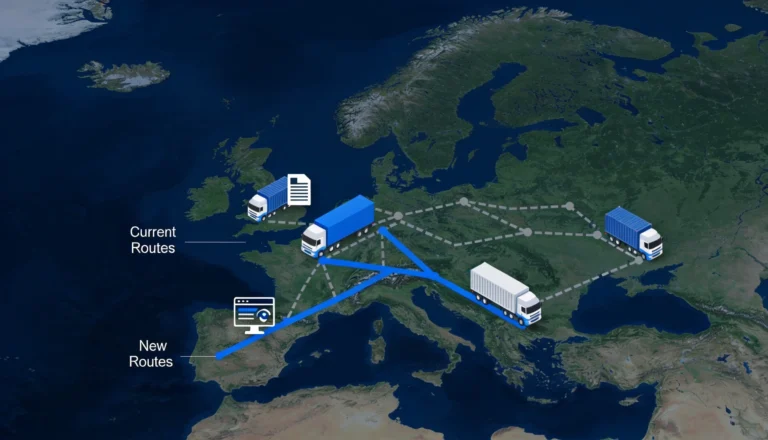
Spain and France already made the practical leap at their shared border on 19 January 2026. Crossing times went down, supply chain visibility went up. The Benelux region has extended its pilot project until July 2027 to give businesses in this busy logistics corridor a little extra breathing room. Russia, meanwhile, introduces its own mandatory eCMR requirements from 1 September 2026, which adds another layer for anyone running Eastern European routes.
In short: the date is set, but the road to get there is bumpy and varies from country to country.
Same information, different format and a few new rules
The eCMR contains the same information as the paper CMR. What changes is the format and a number of technical requirements that come with it. Advanced electronic signatures, real-time data access, audit trails that show exactly who signed when and where.
The legal responsibility framework stays the same. As the carrier, you remain responsible for ensuring valid documentation is in place. Three signatures are still required: consignor, carrier, consignee. Each one must meet the legal standards of the eIDAS Regulation, be clearly linked to the person signing, and reveal any later changes to the data.
In practice this means:
- an eFTI-certified platform that produces legally valid documents;
- electronic signature capability that meets eIDAS standards;
- full audit trails of who signed, when, where and what was changed;
- data retention for at least one year, in line with national rules;
- integration with your existing transport management system.
It is doable. But it is not something you put off until the week before a deadline.
Would you like help on how to act? Please contact team Trasegro.
A patchwork of national rules
Here is where it gets interesting. Of the countries party to the CMR Convention, 38 have ratified the 2008 eCMR protocol. Twenty have not. That means a shipment crossing through a non-ratifying country may still need paper documents or an alternative digital solution, even when the rest of the route is fully digital.
Every country may interpret and enforce the rules slightly differently. For shippers handling cargo through several jurisdictions, this is exactly the kind of detail that turns a planned arrival into an unplanned conversation at a roadside check.
This is where experience pays off. Knowing where digital flies, where paper still wins, and which platforms talk to which national systems is becoming part of the freight forwarder’s craft.
The upside is real
Once you have the system in place, the benefits show up quickly. Companies that have implemented eCMR report administrative time dropping from 50 minutes to 20 minutes per shipment, a 60 percent gain. Annual savings of around €2,000 per company, with overall cost reductions ranging from 54 to 83 percent depending on size and process maturity.
But the numbers tell only part of the story. The real difference is in the day-to-day:
- documents available instantly at borders and inspection points;
- automated checks that catch errors before they cause problems;
- better visibility for temperature-controlled and GDP-compliant shipments;
- no more lost, smudged or damaged paper documents;
- a lighter footprint, both administrative and environmental.
For pharmaceutical shipments under GDP rules, or ADR transport with strict documentation requirements, real-time visibility is not a luxury. It is a quality control mechanism.
Preparing the organisation, not just the system
A successful transition to eCMR is not really an IT project. It is an operational one. The systems matter, but the way your people work with them matters more.
Start with a clear review of how documentation currently flows through your organisation. Where does paper enter, where does it leave, where does it get signed, where does it get stored? Then map that against what the digital version will require. Signature processes, retention rules, system integration, exception handling.
Choosing the right platform is not a small decision. It needs to be eFTI-certified, suited to the type of cargo you move, and flexible enough to deal with the curveballs that come with hazardous goods, GDP shipments, or oversized loads. Integration with your existing TMS is essential, not optional.
And then there is training. Drivers need to know how to present digital documents during a roadside inspection. Office teams need to handle electronic signatures and data sharing correctly. Management needs to understand the compliance picture and where liability sits. A pilot on a few selected routes will reveal more than any internal workshop.
What happens when it goes wrong?
The consequences of non-compliance are not theoretical. Vehicles can be held at borders. Shipments delayed. Fines issued. Different timelines between countries add to the uncertainty, with some sources pointing to mandatory use from January 2026 and others referring to 2029 for full implementation.
Add to that the technical reality that national eFTI platforms and private systems do not always talk to each other smoothly, and you have a recipe for friction during the transition period. Border authorities and inspectors are also still learning. Patience and a solid contingency plan will go a long way.
A change worth getting right
The shift to eCMR is more than a regulatory box to tick. It is an opportunity to make logistics operations leaner, more transparent, and more resilient. For companies moving complex cargo, the right preparation now is what makes the difference between a smooth digital future and a stressful catch-up exercise later.
The deadlines are not going to move. The platforms are being chosen, the borders are going live, and the paper is gradually disappearing from the dashboard.
The good news? You do not have to figure it out alone.
Trasegro: logistics solutions for complex requirements. With a strong focus on personal service and professionalism, Trasegro supports clients in navigating complex logistics challenges with flexible, reliable solutions.