Why North European ports keep clogging up
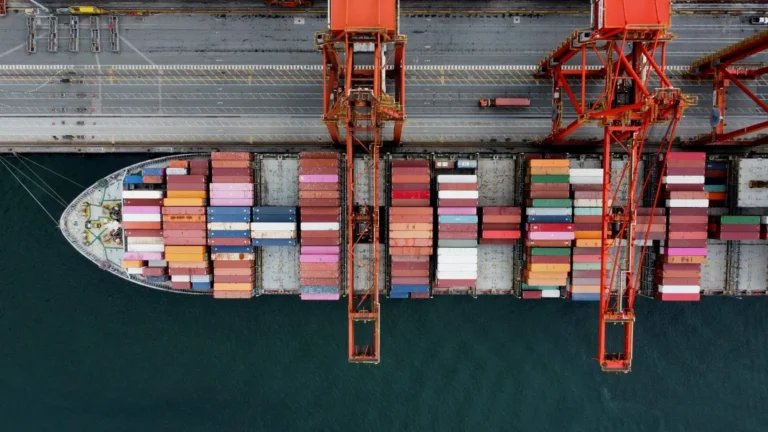
The congestion at hubs like Rotterdam, Antwerp-Bruges, Hamburg and Bremerhaven comes from several pressures stacking on top of each other. Labour shortages, inland transport bottlenecks, new shipping alliances, low water levels on the Rhine and ongoing disruption on the Asia-to-Europe corridor all play a role. Between late March and mid-May 2025, berth waiting times rose by roughly 37% in Antwerp, 49% in Hamburg and a striking 77% in Bremerhaven.
The Red Sea situation adds further friction. With many carriers routing around the Cape of Good Hope, voyages from Asia have gained 7 to 14 days, and typical transit times now run between 35 and 45 days. Add the EU Emissions Trading System surcharges, rising to 70% coverage of emissions in 2026, and your sea freight invoice carries new cost layers even when base rates soften.
What this means for your cargo
Most shippers can absorb a modest delay. For ADR chemicals, pharmaceuticals and high-tech goods, the margin is thinner.
A reefer container holding vaccines that sits too long in a congested yard risks a temperature excursion, especially when reefer plug capacity is overstretched. Antwerp-Bruges recently reported reefer plug usage above 100%, meaning demand exceeded available connections.
For ADR cargo, prolonged queues can push hazardous goods into temporary storage areas that are not designed or approved for them, increasing both compliance and safety risks. For high-tech companies, a single delayed component can halt a production line that costs millions per day.
The pattern is the same across all three sectors: the cost of a delay is often far higher than the cost of rerouting or upgrading the transport mode.
How to reduce the effect for your business? Please contact team Trasegro.
The compliance backdrop
ADR 2025, applicable from 1 January 2025, sets detailed rules on packaging, route planning, crew qualifications and vehicle approval. Good Distribution Practice requires cold chain medicines to stay within defined ranges, typically 2 to 8 degrees Celsius, with continuous monitoring and documented investigation of any excursion. Congestion makes both harder to meet, because it creates uncertainty about how long cargo remains at each stage.
Smart routing: the right gateway at the right moment
Static route planning based only on distance and nominal transit time is no longer sufficient. Smart routing takes into account current congestion, yard utilisation, weather, strikes and infrastructure works. The risk profile can differ sharply even within one port. In early 2026, one Antwerp terminal operated at 81% utilisation with stable truck turnaround times, while a Rotterdam terminal was close to full capacity and far more exposed to disruption.
Directing your critical pharma and ADR cargo towards terminals and gateways that offer the best mix of capacity, expertise and inland connections makes a measurable difference. When Rotterdam or Antwerp-Bruges faces an acute congestion episode, alternatives such as Zeebrugge or Wilhelmshaven may offer better reliability, provided they meet your ADR and GDP requirements.
Mode shifts as a release valve
Beyond port choice, switching transport modes can protect delivery dates. Consider your options carefully:
Sea to rail or road for intra-European flows, reducing exposure to congested transhipment hubs, while respecting ADR route restrictions and weekend driving bans.
Sea to air or sea-air for high-value, low-weight items and temperature-sensitive clinical materials, where a missed delivery window costs far more than the additional freight expense.
Alternative corridors, such as a short sea feeder to a less congested Mediterranean port with onward air connections, to avoid Cape detours and the pressure on the main hubs.
One point that is easy to overlook: every mode shift requires fresh validation. Packaging qualified for a 20-day ocean route may not be suitable for a combined sea-air journey, and tanks moving from barge to road must be checked for the new conditions.
Control tower monitoring: turning strategy into daily reality
This is where smart plans become dependable operations. A control tower brings together data from carriers, port status reports, inland providers, weather services and regulatory updates, then monitors your shipments in real time. For ADR and GDP cargo, it also tracks temperature logs, packaging validation and documentation status.
In practice, this means spotting a spike in yard utilisation and rerouting before a booking gets stuck, rescheduling intermodal connections ahead of an announced strike, and managing demurrage and detention so containers move before charges escalate. If a reefer is disconnected from power in a congested yard, an alert reaches your quality team while there is still time to respond.
Control towers work best alongside a stable network of trusted partners. Shippers relying on ad hoc spot bookings are more exposed to cancelled port calls and poor information flow. With established carrier relationships and early capacity reservation, you gain more reliable space, earlier warnings and prevalidated alternatives to switch to when disruption occurs.
Where to start
Map your trade lanes and segment cargo by criticality, value and compliance category. Assign your most sensitive shipments to resilient routes with stricter monitoring thresholds, and build realistic buffer days into ocean plans instead of assuming best-case transit times. Then review your safety stock and lead time assumptions, because precise transit predictions are simply harder in the current environment.
North European congestion will likely remain part of the landscape for some time. But you are not powerless. With the right routing insight, flexibility in transport modes and a control tower that keeps watch, your supply chain can remain predictable, compliant and transparent.
How to reduce the effect for your business? Please contact team Trasegro.
Want to pressure test your current setup? Get in touch or submit a transport request, and let us think it through with you.
Trasegro: logistics solutions for complex requirements
With a strong focus on personal service and professionalism, Trasegro supports clients in navigating complex logistics challenges with flexible, reliable solutions.