Why the truck parking shortage keeps getting worse
Europe’s freight volumes continue to grow rapidly, while infrastructure development struggles to keep pace.
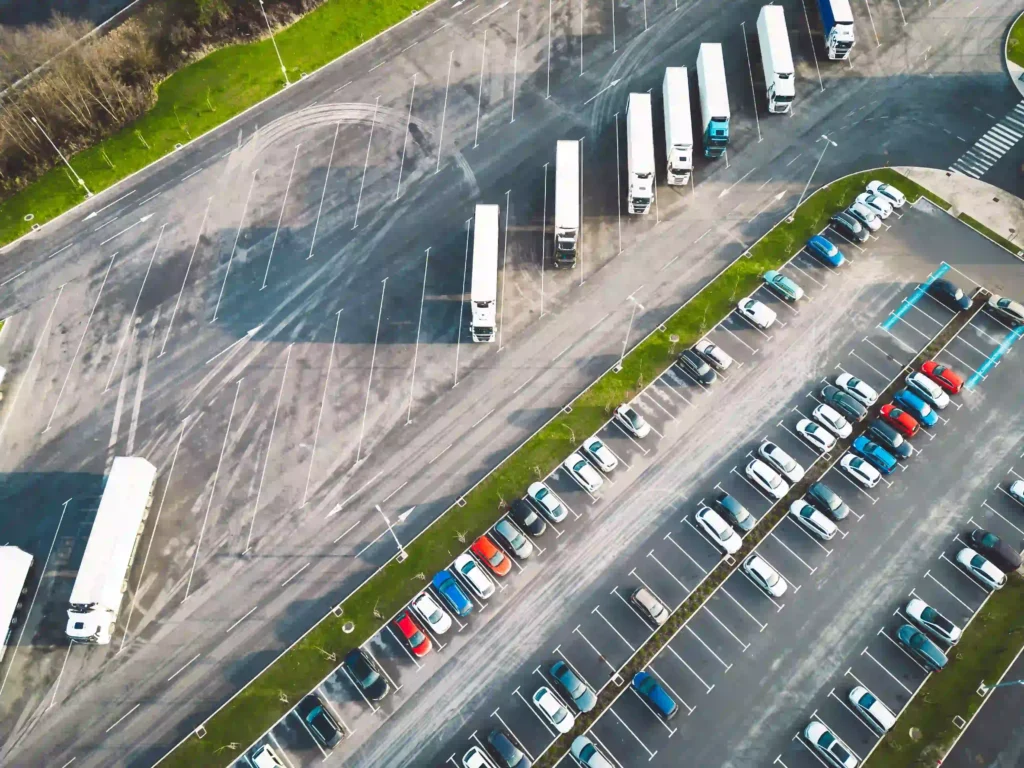
Major freight corridors across Germany, Belgium and the Netherlands are operating far beyond their intended parking capacity. On some routes, parking areas reach full occupancy before dinner time, forcing drivers to improvise or continue driving longer than legally allowed.
In regions like Flanders, one of Europe’s busiest logistics hubs, the gap is particularly visible. Demand exceeds available truck parking capacity by more than 60%. As a result, trucks regularly end up parked on industrial roads, highway exits and unsafe roadside locations.
The problem becomes even more complicated for:
-
- temperature-controlled transport
- pharmaceutical shipments
- ADR and chemical logistics
- high-value cargo
- cross-border express transport
These shipments often require secure parking locations, reliable power infrastructure or specific compliance conditions. Unfortunately, those specialized parking facilities remain extremely limited across Europe.
Compliance pressure creates impossible choices
European driving time regulations leave very little flexibility for drivers and transport planners.
Drivers must take mandatory breaks after 4.5 hours of driving and complete daily rest periods within strict legal windows. At the same time, parking availability becomes increasingly scarce later in the day.
This creates a difficult reality on the road.
A driver may arrive at a full parking area with minutes remaining on their legal driving time. The options are rarely ideal:
- continue driving and risk compliance violations
- park illegally and risk fines
- compromise delivery timing
For logistics planners, these situations are no longer exceptions. They’ve become part of daily operations.
And the consequences are serious. Fines for driving time violations in Europe can quickly rise into the thousands of euros, especially for repeated offences or dangerous goods transport.
The hidden impact on supply chains
The truck parking crisis affects much more than delivery timing.
Every additional minute spent searching for parking increases fuel consumption, driver stress and operational costs. Across large fleets, those delays quickly turn into significant financial losses.
But the biggest risks often involve safety and cargo security.
When drivers are forced to park in unsecured areas, the likelihood of cargo theft rises dramatically. Europe already faces billions of euros in cargo theft losses every year, with many incidents occurring during overnight parking.
For pharmaceutical logistics, the stakes are even higher.
A compromised parking location can create chain-of-custody issues, regulatory concerns or temperature integrity risks, even when the cargo itself remains undamaged.
That makes proactive planning essential.
Smarter route planning is becoming a competitive advantage
Experienced logistics providers are no longer optimizing routes based purely on distance or driving time.
Today, parking availability plays an equally important role.
Understanding where parking shortages occur, at what times congestion peaks and which corridors remain accessible can make the difference between a smooth operation and a disrupted shipment.
Some of Europe’s busiest corridors consistently experience the highest parking pressure:
- Germany’s A1, A4 and A14 routes
- the Rotterdam-Antwerp-Amsterdam triangle
- key border crossings between Benelux and Central Europe
Timing also matters.
Parking facilities that are half empty around midday can become completely saturated by early evening. That means departure schedules, loading windows and route selections increasingly need to align with parking realities.
The fastest route on paper is no longer always the most reliable route in practice.
Technology helps, but it doesn’t solve the problem
Digital parking platforms and real-time occupancy tools are helping transport companies improve visibility across major routes.
Reservation systems, parking apps and predictive forecasting models allow planners to anticipate shortages earlier and adjust routes before problems escalate.
Still, adoption remains fragmented across Europe.
Many parking areas still operate without digital infrastructure, especially on secondary routes or in rural regions. Real-time information is not always reliable, and availability can change rapidly during peak hours.
Technology helps reduce uncertainty, but strong operational planning remains essential.
Parking strategy is now part of logistics strategy
For companies handling complex transport operations, parking can no longer be treated as an afterthought.
Successful logistics planning increasingly depends on:
- parking-aware route optimization
- compliance-focused scheduling
- secure facility partnerships
- real-time operational visibility
- proactive driver support
Especially within pharmaceutical, chemical and temperature-sensitive logistics, parking availability directly influences reliability and compliance performance.
This is where experience and preparation make the difference.
How Trasegro supports complex transport operations
At Trasegro, we understand that modern logistics challenges go far beyond moving freight from A to B.
Our teams continuously monitor operational risks across European corridors, including parking pressure, compliance requirements and infrastructure bottlenecks. By integrating these factors into transport planning from the start, we help clients reduce delays, improve reliability and protect sensitive cargo throughout the journey.
Trasegro: logistics solutions for complex requirements
With a strong focus on personal service and professionalism, Trasegro supports clients in navigating complex logistics challenges with flexible, reliable solutions.
The future of European logistics requires smarter planning
The European Union plans to expand secure truck parking infrastructure over the coming years, but current development simply cannot keep up with freight growth.
That means the parking shortage will remain a major operational challenge throughout this decade.
For logistics companies, the question is no longer whether parking issues will affect operations, but how well they are prepared to manage them.
Businesses that invest in smarter planning, stronger partnerships and operational visibility will be far better positioned to maintain reliable supply chains in an increasingly complex transport landscape.
Looking to reduce disruption within your supply chain?
Please contact team Trasegro to discover how smarter logistics planning can improve reliability, compliance and delivery performance across Europe.