A double blockade is choking global trade
The situation is more serious than many companies initially anticipated. Not only are we dealing with the closure of the Strait of Hormuz, but the Red Sea also remains problematic due to ongoing Houthi activity. This double blockade means that two of the most important shipping routes for trade between Asia, Europe, and the Middle East have become nearly unusable.
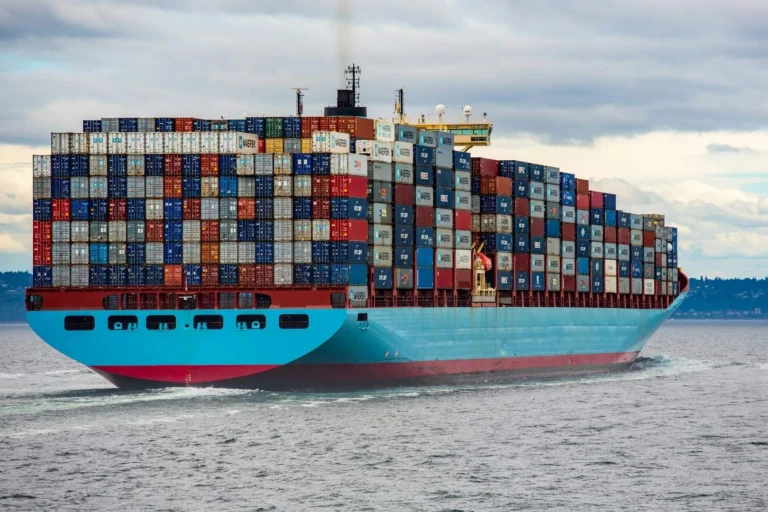
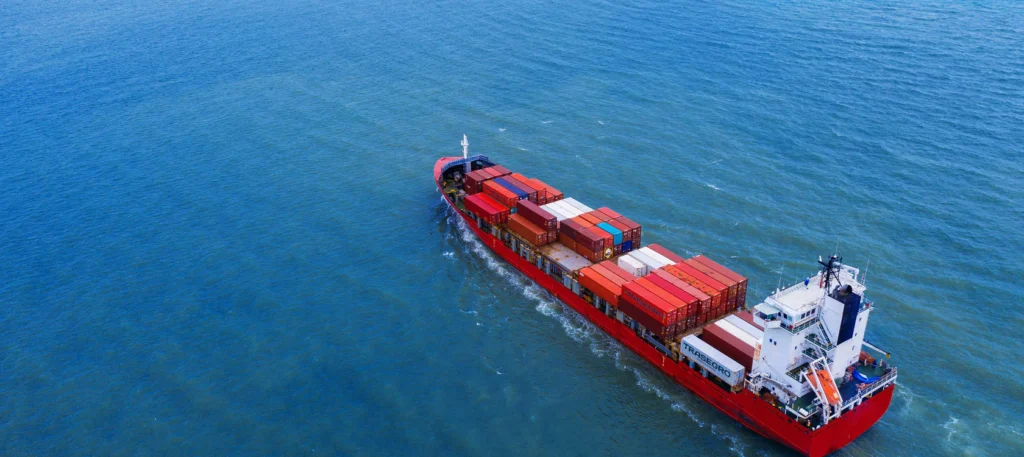
For Dutch and Belgian companies that rely on imports from Asia or exports to the Gulf States, this creates immediate operational challenges. More than 170 container ships with a combined capacity of 450,000 TEU are currently stranded in the Persian Gulf. Major shipping lines such as MSC, CMA CGM, and Hapag-Lloyd have suspended all bookings to the region.
Insurance coverage expires, costs increase
As of March 5, 2026, war risk insurance coverage for vessels operating in the area has expired. Without proper insurance coverage, shipping companies are unable and unwilling to send vessels through the Strait of Hormuz. This is not a theoretical risk, but a hard reality that directly impacts your supply chain.
The financial consequences are substantial. Companies that now have to reroute via the Cape of Good Hope are seeing transport costs increase by €400,000 to €1 million per voyage. In addition, this route extends transit times by 7 to 14 days. For time-critical shipments in industries such as pharmaceuticals or high-tech manufacturing, these delays can have serious consequences.
Rising fuel prices increase pressure on global logistics
The closure of the Strait of Hormuz is also having a direct impact on global fuel prices. Because a significant share of the world’s oil and gas flows normally passes through this route, the disruption is causing volatility in energy markets. This is leading not only to higher crude oil prices, but also to rising costs for bunker fuel, diesel, and kerosene. For logistics companies, this means that nearly all forms of transport are becoming more expensive, from sea freight to air cargo and road transport. Ultimately, these increasing fuel costs are often passed on through higher freight rates, placing additional pressure on overall supply chain costs.
Industries under pressure, from pharma to technology
The pharmaceutical industry is experiencing a particularly strong impact. Approximately 65% of India’s pharmaceutical exports are transported via sea freight, a significant portion of which normally travels through the now-blocked routes. Active pharmaceutical ingredients (APIs) from Asia are facing delays that could lead to production shutdowns in European factories.
The technology sector is facing similar challenges. Semiconductors from Taiwan and electronic components from China now have to take longer routes, resulting in:
- Extended delivery times of at least two weeks
- Higher transport costs that are passed on to end users
- Uncertainty around delivery dates, complicating production planning
- Increased risk of production interruptions in just-in-time manufacturing environments
Practical solutions for urgent transport challenges
In times of crisis, it is essential to work with a freight forwarder who can act quickly and has access to alternative routes and transport options. For complex, time-critical, or sensitive shipments, choosing the right logistics partner is crucial.
An effective approach requires:
- Continuous monitoring of the situation and direct communication about changes
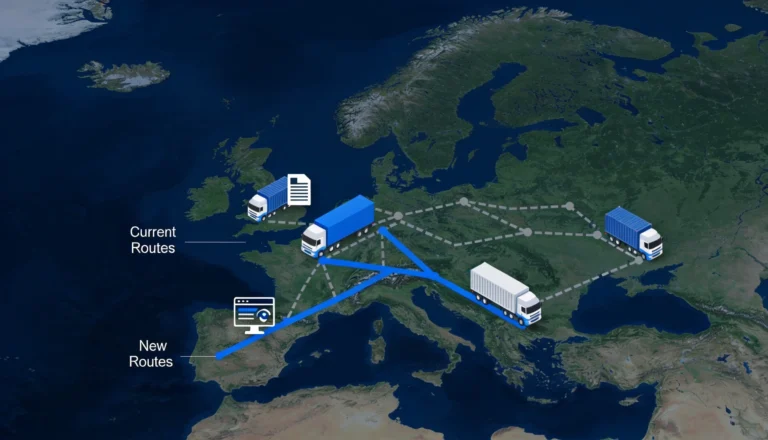
- Flexible route planning with pre-developed alternatives
- Combined transport solutions that intelligently integrate sea, air, and road transport
- Timely capacity reservations outside the overloaded spot market
- Strong knowledge of regulations such as ADR, GDP, and other compliance requirements that must remain guaranteed even when routes change
Inventory strategy and risk management
For critical components and raw materials, we recommend temporarily increasing inventory levels to cover 30 to 60 days. This buffer provides the flexibility needed to organize alternative transport routes without putting production at risk. At the same time, companies should remain cautious about overstocking if routes normalize again.
Key considerations for your inventory strategy include:
- Identifying critical items that must receive absolute priority
- Proactively communicating with suppliers about new delivery timelines
- Updating contracts with force majeure clauses
- Considering air freight for high-value or highly time-sensitive shipments
Central coordination for maximum control
During times of disruption, visibility becomes more important than ever. A centralized approach that monitors all transport movements provides greater control over your supply chain. This means not only knowing where your goods are located, but also anticipating delays and immediately activating alternatives.
With centralized coordination, you gain real-time insight into transport status, documentation, customs handling, and expected arrival times. When disruptions occur, an experienced team can immediately switch to alternative solutions, allowing you to focus on your operations instead of tracking every shipment individually.
Long-term outlook remains uncertain
Market analysts disagree on how long the current crisis may last. While some expect a short disruption lasting only a few weeks, others warn of a prolonged impasse that could continue for months. This uncertainty makes flexibility and adaptability even more important.
Oil prices currently show a mixed picture, with peaks reaching €82 per barrel. At the same time, J.P. Morgan expects an average price of €60 for 2026 due to a global supply surplus. This suggests the disruption could be temporary, although there is no certainty yet.
Taking action, turning crisis into opportunity
The current situation requires decisive action. Companies that make the right choices now in their logistics strategy can limit the impact and potentially even gain a competitive advantage. However, this requires a partner that looks beyond standard solutions.
For complex transport operations where compliance, timing, and reliability are critical, knowledge of alternative routes and transport options is essential. Whether it concerns temperature-controlled pharmaceutical transport, ADR-classified chemicals, or time-critical machine parts, every shipment requires a tailored solution.
The crisis surrounding the Strait of Hormuz highlights the importance of a reliable logistics partner who is not dependent on the spot market and has access to secured capacity and strong carrier relationships. In uncertain times like these, this provides the stability and flexibility required to keep your supply chain moving. Would you like to know how we can solve your specific transport challenges? Contact us for personal advice or submit a transport request directly.